What You Actually Bring Home: The Surprising Things That Outlast Every Snow Globe
Somewhere in a junk drawer — maybe yours, maybe mine — there's a keychain shaped like the Eiffel Tower, a fridge magnet with a lighthouse on it, and a small ceramic something-or-other wrapped in tissue paper that never quite made it to a shelf. These are the relics of trips we loved, tokens we grabbed near the exit of a museum or from a vendor cart outside a famous square. We bought them because we wanted to hold onto something. And then, quietly, we forgot about them.
Meanwhile, the thing that actually changed us is sitting on the kitchen counter being used every single weekend.
The Cookbook That Became a Ritual
Ask around and you'll find a surprisingly common version of this story: someone travels somewhere, eats something that rearranges their entire understanding of what food can be, and then — almost as an afterthought — picks up a local cookbook from a small shop before heading to the airport. Not as a souvenir, really. More like a desperate attempt to recreate the feeling.
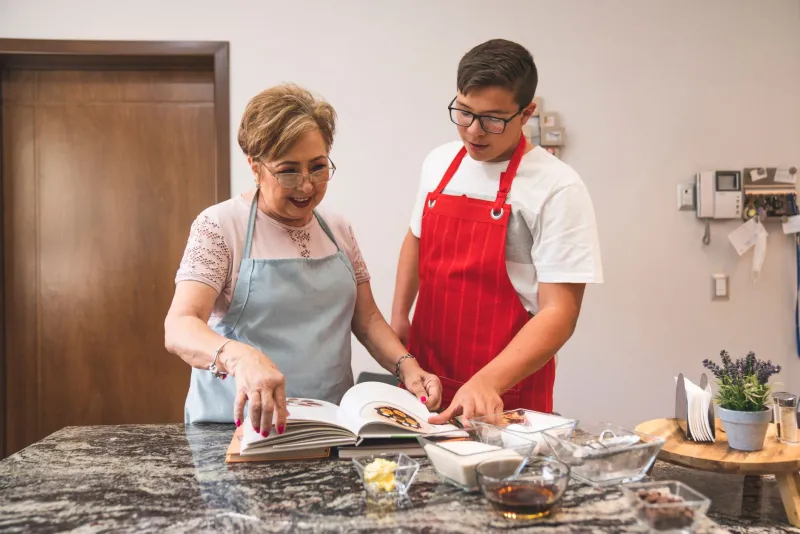
For a lot of travelers, that cookbook becomes something else entirely. It becomes a Sunday morning thing. A "we're having people over" thing. A quiet personal ritual that threads the memory of a place into the ordinary fabric of life back home. The recipes might get modified over time — you swap an ingredient you can't find at your local grocery store, you adjust the spice level — and in doing so, the dish becomes yours. The trip becomes yours in a new way.
That's the thing about useful keepsakes: they don't just remind you of a place. They keep pulling you back to it, again and again, in the most everyday moments.
A Business Card, a Decade, a Friendship
Here's another one. You're wandering through a neighborhood you stumbled into by accident — not on the itinerary, not in the guidebook — and there's a street musician playing something you've never heard before. You stop. You stay longer than you planned. At some point you talk. Maybe they hand you a crumpled card, or you exchange contact info the modern way, thumbs flying over phone screens while the music is still in the air.
You think: I'll probably never follow up on this.
And then you do. And ten years later, this person — who you met on a sidewalk in a city you were only visiting for four days — is someone you text when something good happens. Someone who sends you a voice memo from the other side of the world just to share a song they thought you'd like.
No gift shop in the world sells that. You can't put it in your carry-on. But it's real, and it travels with you everywhere.
Why We Keep Reaching for the Wrong Things
It's worth being honest about why we buy the stuff we buy. Airport terminals and tourist-area shops are designed to trigger a very specific anxiety: you're about to leave, and you need something physical to prove you were here. The snow globe, the branded tote bag, the little jar of locally-themed jam — they're answers to a fear, not expressions of a memory.
And there's nothing inherently wrong with that. A well-chosen souvenir can be genuinely meaningful. But the disconnect happens when we mistake purchasing for preserving. When we think that if we just grab the right object, the feeling will stay.
The feeling doesn't live in the object. It lives in what the object connects to — the story, the relationship, the sensory detail that makes a place unforgettable. Which is why the things that actually stick tend to be the ones that carry those connections most directly.
The Keepsakes Nobody Thinks to Count
Some of the most durable travel souvenirs don't look like souvenirs at all:
A phrase in another language that you started using ironically and now just... use. Your friends know what it means because you've said it so many times.
A playlist you made on a long train ride that still sounds exactly like that week — the light through the window, the landscape moving past, the particular feeling of being between places.
A habit you picked up abroad that quietly rewired your daily routine. Maybe it's the way you make coffee now, or the fact that you started taking afternoon walks, or that you eat dinner an hour later than you used to.
A photograph you didn't take. The moment you chose to just look instead of reaching for your phone — and somehow that's the image that's stayed clearest.
None of these cost anything. None of them fit in a checked bag. And yet ask most seasoned travelers what they actually brought home from the trips that mattered most, and this is the category they keep circling back to.
What This Says About What We're Really Looking For
Maybe the best way to think about travel keepsakes is to flip the question. Instead of asking what can I take from this place, ask what is this place giving me that I didn't know I needed?
Sometimes it's a new skill — a cooking technique, a craft, a way of navigating a city on foot. Sometimes it's a perspective shift so gradual you don't notice it until you're back home and you catch yourself thinking about something differently. Sometimes it's a person, a conversation, a single afternoon that recalibrated your sense of what a good life could look like.
These are the souvenirs that compound. The ones that keep paying out, quietly, long after the trip is over.
The snow globe will collect dust. The tote bag will eventually tear. But the cookbook gets splattered and dog-eared and passed down. The friendship from the street corner turns into something you couldn't have planned if you tried. The phrase becomes part of how you talk. The habit becomes part of who you are.
That's what travel actually gives you, if you let it. And the funny thing is, you usually don't even realize you're carrying it until you're already home.


