The Trip That Went Sideways (And Why You'll Never Stop Telling That Story)

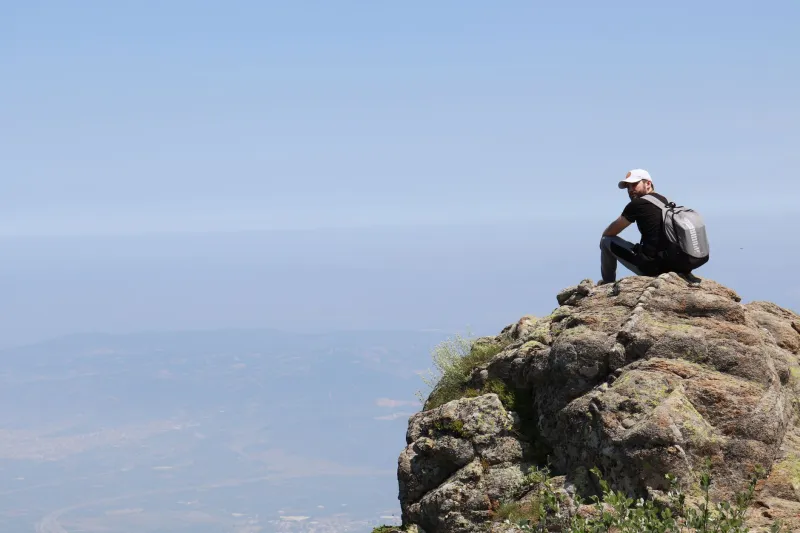
Photo by Photo by Dimitri Karastelev on Unsplash on Unsplash
Ask someone about their most memorable travel experience and there's a decent chance they don't lead with the trip that went perfectly. They lead with the one that didn't.
The flight that got canceled. The rental car that broke down somewhere in rural Montana. The Airbnb that turned out to be a shed. The hurricane that trapped them in a New Orleans hotel for three extra days with strangers who became, inexplicably, lifelong friends.
There's something about travel gone wrong that sticks to us differently than travel gone right. And the more you dig into it — the stories, the psychology, the strange alchemy of a ruined itinerary — the more you start to wonder if the disasters were never really disasters at all.
When the Plan Is the Problem
Most of us approach travel as a logistics exercise. We book flights, confirm reservations, screenshot the address of the restaurant we've been wanting to try. We optimize. We prepare. And then life, weather, airline scheduling software, or some combination of all three reminds us that we were never actually in charge.
The interesting thing is what happens next. When a plan collapses, so does the structure that was quietly keeping us in tourist mode — moving from checkpoint to checkpoint, experiencing a place through a pre-approved filter. Suddenly, there's no itinerary. There's just here, and now, and whatever unfolds.
For a lot of travelers, that moment of forced improvisation is when the trip actually begins.
Real Stories From the Road
We asked LJ's World readers to share their most spectacularly derailed travel experiences. What came back wasn't a collection of complaints — it was something closer to a highlight reel.
Stranded in Amarillo, Texas. One reader was driving cross-country from Atlanta to Phoenix when her car threw a belt outside Amarillo on a Sunday afternoon. The nearest mechanic couldn't get to her until Monday morning. "I was furious for about an hour," she wrote. "Then I found a honky-tonk that had live music that night, and I ended up dancing with a 70-year-old retired oil worker who told me the best stories I've ever heard. I still think about that night more than anything else from that whole trip."
The wrong Portland. A couple booked a weekend trip to Portland — and didn't realize until they landed that they'd booked Portland, Maine instead of Portland, Oregon. "We were supposed to meet friends in Oregon," the reader explained. "Instead we were in Maine in November with no winter coats and no idea where anything was." They spent the weekend wandering the Old Port, eating lobster rolls in the cold, and stumbling onto a small art gallery opening where the artist invited them to the after-party. "It's the only trip where I genuinely didn't know what was going to happen next. I think that's why I loved it."
The weather that wouldn't quit. A solo traveler heading to the Outer Banks of North Carolina hit a tropical storm that shut down the coast for four days. Stuck in a small motel outside of Kitty Hawk, she ended up spending the time talking to the owner — a woman in her 80s who had lived on the Carolina coast her whole life and had stories about hurricanes going back to the 1950s. "I went there to see the beach," she said. "I ended up learning more about American coastal history than I ever would have found in a guidebook."
Why Our Brains Love the Wreckage
There's actual science behind why the worst trips make the best memories. Psychologists who study autobiographical memory have found that we tend to recall experiences that were emotionally intense, novel, or required active problem-solving far more vividly than experiences that were smooth and predictable. A perfectly executed vacation — great weather, no hiccups, everything as advertised — is genuinely pleasant but cognitively forgettable. A trip that goes sideways demands engagement. It forces decisions. It creates a story with actual stakes.
There's also something called the "peak-end rule," a concept developed by psychologist Daniel Kahneman, which suggests that we judge experiences largely based on how they felt at their most intense moment and how they ended — not on the average of the whole thing. A trip that had a dramatic low followed by an unexpectedly warm resolution tends to live in memory as a positive experience, even if the majority of it was stressful.
In other words, your nervous system is basically designed to make you treasure the chaos.
The Unexpected as a Travel Philosophy
None of this means you should deliberately book the wrong city or hope for a mechanical failure. But it does suggest something worth sitting with before your next trip: the moments you're most trying to avoid might be the moments most worth having.
Leaving a little room in the schedule for nothing. Saying yes when a local suggests something that wasn't in the plan. Treating a delay as an invitation rather than an insult. These aren't just feel-good travel tips — they're the conditions under which the best stories get made.
One reader put it simply: "I've taken a lot of trips where everything went fine. I don't remember most of them. I remember every single thing about the ones that didn't."
What You Actually Bring Home
The souvenirs from a trip that falls apart are different from the ones you buy in an airport gift shop. They're not objects — they're moments. The stranger who helped you figure out the train system in a city where you didn't speak the language. The diner you found at midnight because everything else was closed. The version of yourself that handled something hard and kept going anyway.
Travel at its most useful isn't about seeing new places. It's about becoming slightly different — a little more flexible, a little more capable of surprise, a little less attached to the idea that comfort and control are the same thing.
The trip that went sideways taught you that. The one that went perfectly, probably didn't.
So the next time your flight gets canceled, your reservation falls through, or you end up somewhere you never intended to be — take a breath. Look around. Pay attention.
You might be right in the middle of your best story yet.