5 Famous American Landmarks With Stories the Tour Guides Barely Mention
There's a version of America you see on postcards — the Grand Canyon at golden hour, the Gateway Arch gleaming in the Missouri sun, the neon signs of Las Vegas blinking against the desert dark. And then there's the version underneath that: the complicated, layered, genuinely fascinating history that most visitors walk right past.
If you're the kind of traveler who wants more than a photo op — who wants to actually feel a place — these are the stories worth knowing before you go.
1. The Gateway Arch (St. Louis, Missouri) — Built on Displacement
The Gateway Arch is one of the most recognizable structures in the country. At 630 feet, it's the tallest man-made monument in the United States, and it draws millions of visitors every year to the St. Louis riverfront. The official story is triumphant: a monument to westward expansion, American ambition, and frontier spirit.
But the ground it stands on tells a different story.
To build the Jefferson National Expansion Memorial in the 1930s and 40s — the park that would eventually become the Arch's home — the federal government demolished 40 square blocks of St. Louis's historic riverfront. That included entire neighborhoods, most of which were home to Black residents and working-class immigrant communities who had built lives there for generations. Roughly 10,000 people were displaced. Their homes, churches, and businesses were erased to make way for a monument to American progress.
The National Park Service has in recent years made more deliberate efforts to acknowledge this history, and the museum beneath the Arch now includes exhibits on the full complexity of westward expansion — including its devastating impact on Native American communities. But many visitors still leave without knowing what was lost to build the landmark they just photographed.
2. Route 66's Afton, Oklahoma — The Green Book in the Heartland
Afton, Oklahoma, population just over 1,000, is a classic Route 66 town. It's got a restored stretch of the Mother Road, a vintage buffalo ranch that tourists love, and the kind of slow, dusty charm that Route 66 nostalgia is built on. For many visitors, it's a quick stop and a few photos.
What most people don't know is that Afton and towns like it along Route 66 played a quiet but crucial role in the civil rights era through something called the Negro Motorist Green Book — a travel guide published annually from 1936 to 1966 that helped Black American travelers navigate a country where sundown towns, segregated motels, and outright danger were daily realities on the road.
Route 66 was not equally welcoming to everyone who drove it. Black travelers needed to know which gas stations would serve them, which diners wouldn't turn them away, which towns were safe to stop in after dark. The Green Book was their survival guide. Several businesses along the Oklahoma stretch of Route 66 were listed in its pages — a fact that reframes the entire "road trip freedom" mythology of the highway in a profound way.
If you're driving Route 66, the National Historic Route 66 Federation and various local preservation groups have been working to mark and honor these Green Book sites. Seek them out. They change the whole journey.
3. Fisherman's Wharf (San Francisco, California) — The Immigrant Engine Behind the Postcard
Sourdough bread bowls. Clam chowder. Sea lions barking on Pier 39. Fisherman's Wharf is one of San Francisco's most visited neighborhoods, and it has the tourist-friendly polish to prove it. What it also has — if you look a little closer — is one of the richest immigrant community histories in the country.
The Wharf was built almost entirely by Italian immigrants, predominantly from Sicily and the Ligurian coast, who began arriving in San Francisco in the mid-1800s. They brought their fishing techniques, their boats (the iconic lateen-rigged feluccas), and their culture. By the early 20th century, the Italian fishing community had made the Wharf the most productive fishing port on the West Coast.
Families like the Alioto and Tarantino clans didn't just fish — they built restaurants, formed cooperatives, and shaped San Francisco's food culture in ways that still echo today. During World War II, Italian American fishermen were classified as "enemy aliens" by the federal government and banned from the waterfront they had built. Many lost their boats and their livelihoods overnight.
The Wharf's history is a story of immigration, resilience, wartime injustice, and community — not just chowder. Walking it with that context feels entirely different.
4. The National Mall (Washington, D.C.) — America's Front Yard and Its Protest Legacy
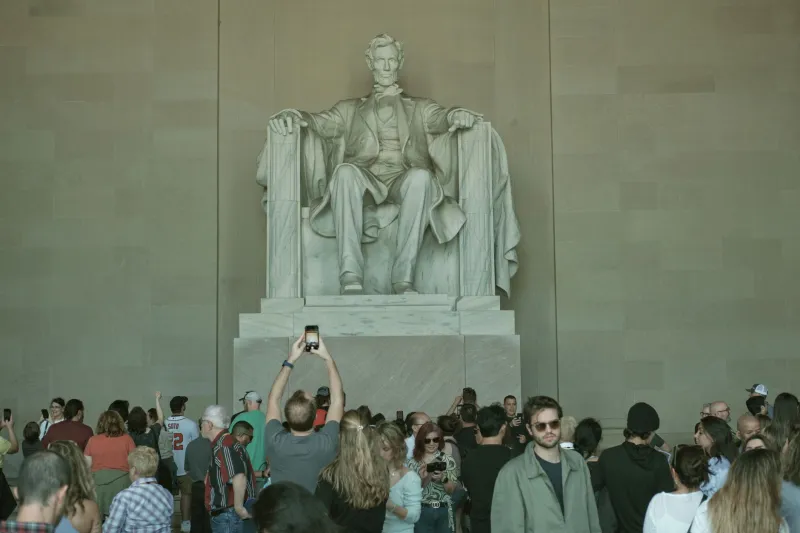
Every American has a mental image of the National Mall — the Lincoln Memorial reflecting in the pool, the Washington Monument pointing at the sky, the Capitol dome framing it all. It's the symbolic heart of the nation, the place where democracy is supposed to look its most majestic.
It's also one of the most contested pieces of ground in the country's history.
The Mall has been the site of more than 150 years of protest, demonstration, and collective action — and not all of it makes it into the standard civics lesson. Yes, Martin Luther King Jr.'s "I Have a Dream" speech happened here in 1963. But the Mall was also where Coxey's Army — a march of unemployed workers — descended on Washington in 1894, where suffragists marched for the vote in 1913 (the day before Woodrow Wilson's inauguration, deliberately), and where Vietnam veterans threw their medals onto the Capitol steps in 1971.
More recently, it's been the site of Women's Marches, climate demonstrations, and ongoing debates about whose monuments belong on its grounds. The Mall isn't a museum of American triumph — it's a living argument about what America is supposed to be. Visiting it with that lens turns a sightseeing trip into something closer to a civics experience.
5. The French Quarter (New Orleans, Louisiana) — More Than Mardi Gras
New Orleans's French Quarter is famous for Bourbon Street, jazz clubs, beignets, and the kind of late nights that don't need much explanation. It's also one of the most historically layered neighborhoods in the entire country — and most visitors only ever scratch the surface.
The Quarter was a major center of the American slave trade. The St. Louis Hotel, which once stood at the corner of St. Louis and Chartres Streets, was home to one of the largest slave auction rotundas in the South. Thousands of enslaved people were bought and sold there. The site is now largely unmarked, absorbed into the neighborhood's party-town identity in a way that historians and activists have long criticized.
The French Quarter is also home to a rich free Black Creole history that predates the Civil War — a community of mixed-race, often Catholic, French-speaking people who built significant wealth and culture in New Orleans before emancipation. Their legacy is woven into the architecture, the music, and the food of the city in ways that most tourist itineraries don't acknowledge.
Organizations like the New Orleans African American Museum and various walking tour companies now offer experiences that center these stories. If you're heading to New Orleans, seek one out before you hit Bourbon Street. The city you discover will be richer for it.
The thing about America's landmarks is that they were never just monuments or neighborhoods or stretches of road. They're arguments, compromises, erasures, and triumphs all stacked on top of each other. The more stories you know going in, the more you'll see when you get there.