The Moment You Didn't Photograph (And Why It's the One You'll Never Forget)

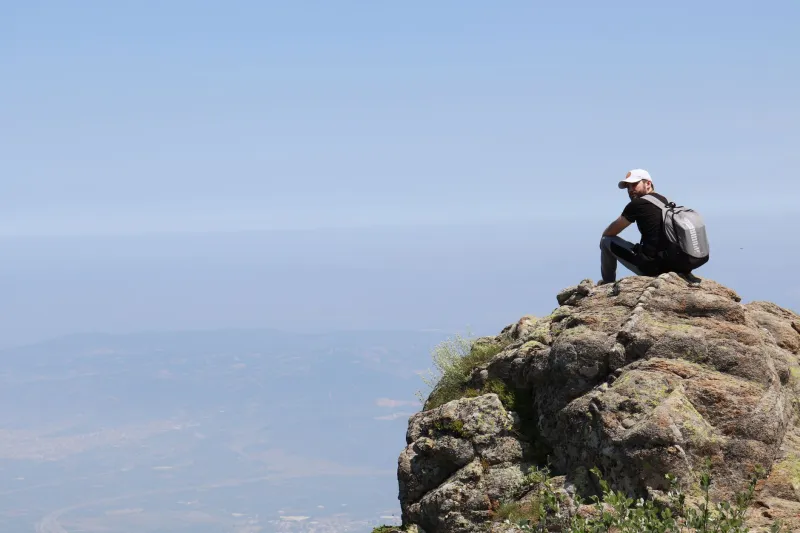
Photo by Photo by Harry Le on Unsplash on Unsplash
Let me paint you a picture. You're somewhere genuinely remarkable — maybe it's a narrow street in a city you've never visited, or a stretch of coastline that doesn't have a cute name yet, or a bar where you ended up talking to a stranger for four hours and somehow solved most of your personal problems. And at some point in that experience, you reach for your phone.
Sometimes you take the photo. Sometimes, for whatever reason, you don't. And here's the thing: years later, the moments you remember with the most texture, the most feeling, the most realness — they're almost never the ones that made it to Instagram.
That's not a coincidence. And it's worth sitting with.
The Feed Version of Travel Isn't Fake, Exactly
Let's be fair about this. Travel content isn't inherently dishonest. The sunset really was that color. The meal really did look like that. The hotel pool existed and it was, genuinely, a very nice pool.
The issue isn't fabrication — it's curation. And curation, by definition, leaves things out.
What gets left out is almost always the stuff that made the trip feel real: the four-hour delay in a regional airport with no functioning WiFi. The afternoon you got completely lost and then accidentally found the best sandwich of your life. The conversation with your travel companion that got uncomfortable and honest in a way that only happens when you're both exhausted and far from home. The moment of pure, unwitnessed awe — standing somewhere extraordinary with no one around and no particular desire to prove it to anyone.
None of that photographs well. None of it performs. And so it quietly gets filtered out of the story we tell online, even though it's almost entirely the story that mattered.
What the Pressure to Document Actually Costs You
There's real research on this — the "photo-taking impairment effect" is an actual documented phenomenon where people who photograph an experience tend to remember it less vividly than people who simply lived it. Something about outsourcing the memory to the device seems to signal the brain that it doesn't need to hold on quite as tightly.
But beyond the cognitive stuff, there's something subtler happening in American travel culture specifically. We've developed a kind of performance anxiety around experiences. A beautiful place isn't just a beautiful place anymore — it's content. And content requires framing, lighting, captions, and a decision about which platform it belongs on.
That's a lot of mental overhead to carry into a moment that's supposed to be about getting out of your head.
Ask anyone about their most memorable travel experience and they'll almost never lead with something they posted. They'll tell you about the rain that stranded them somewhere, the wrong turn that became the right one, the local person who invited them in for coffee and ended up changing how they think about something. The un-Instagrammable stuff. Every time.
The Quiet Magic That Doesn't Translate
There's a particular quality to the moments that resist documentation, and it has to do with presence. You can't really be inside an experience and simultaneously outside it, framing it for an audience. The two states are genuinely in tension with each other.
The light at 6 a.m. on a road you weren't supposed to be on. The way a city sounds when you've been walking in it for six hours and you've finally stopped being a tourist and started just being a person. The specific feeling of eating something unfamiliar and having it be exactly right. These things exist in a register that cameras — even really good ones, even ones with portrait mode and all the filters — can't quite reach.
And maybe that's fine. Maybe some experiences are supposed to be yours alone. Not everything is diminished by being unwitnessed. Some things are actually made by it.
What We're Really Looking For When We Leave Home
Here's the question underneath all of this: what are we actually trying to get out of travel? If the honest answer is "experiences that make me feel alive and different and connected to something larger than my daily routine" — then the camera-first approach is working against us, at least some of the time.
If the answer is "content that performs well and makes my life look interesting" — well, that's a valid thing to want, but it's worth being honest that it's a different goal. And it tends to produce a different kind of trip.
The Americans who travel most memorably — the ones with the best stories, the ones who seem genuinely transformed by their time away — tend to be the ones who've made some kind of peace with letting moments just be moments. They're not anti-technology or preachy about it. They just seem to have figured out that the story they're building inside themselves is worth protecting, even if it means the feed suffers a little.
Put the Phone Down. Just Sometimes.
This isn't a manifesto. Nobody needs another lecture about being present, and honestly, take all the photos you want — travel photography is its own legitimate art form and there's nothing wrong with wanting to remember what a place looked like.
But maybe, on the next trip, try letting one moment go undocumented. Not every moment. Just one. The one that feels too big or too quiet or too strange to explain to anyone who wasn't there.
Sit inside it. Let your brain do the filing. Trust that the memory will hold.
Because the moments that shape how you see the world? They're almost never the ones with the most likes. They're the ones that happened when nobody was watching — including you.