Meant for You, Kept by Me: The Strange Second Life of Gifts That Never Got Delivered
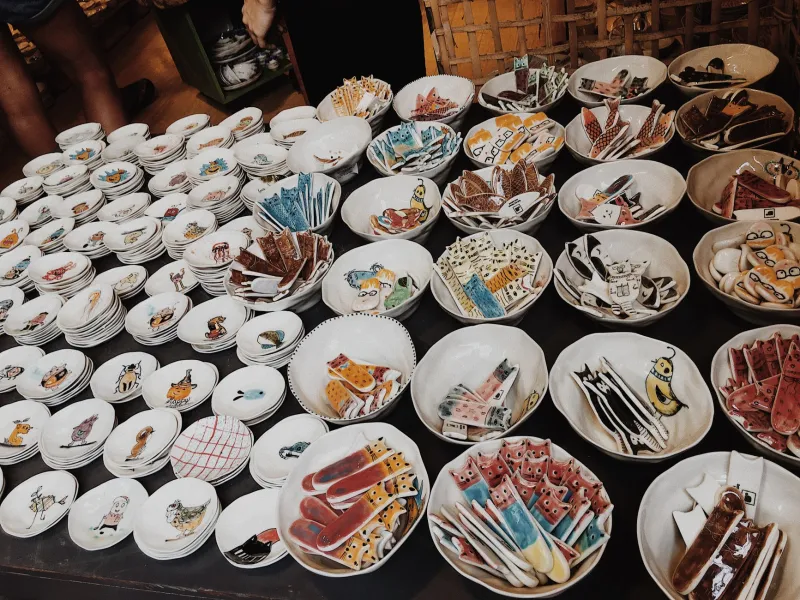
There's a small ceramic dish sitting on my bathroom counter. It's hand-painted, turquoise and rust-orange, and it holds whatever ends up in my pockets at the end of the day — a hair tie, a couple of quarters, the occasional receipt I'll never look at again. It's been there so long that I genuinely forget, for weeks at a time, that I bought it for someone else.
I picked it up at a market in Santa Fe about four years ago. It was supposed to go to a friend back home — the kind of friend you think of immediately when you spot something that looks exactly like them. I wrapped it in a bandana in my carry-on, brought it all the way back to my apartment in one piece, and then... didn't give it to her. The friendship got complicated. The timing never felt right. And then the dish just quietly became mine.
I've started calling these things ghost gifts. You probably have at least one.
The Moment You Decide to Keep It (Even If You Never Actually Decide)
Here's the thing about ghost gifts — most of the time, you don't consciously choose to keep them. It's not like you look at the thing and think, actually, this is mine now. It's more that life rearranges itself around the gift, and one day you realize it's been on your shelf for two years and the person it was meant for hasn't crossed your mind in months.
Sometimes the relationship ends. Sometimes the person moves across the country and the small ceramic dish suddenly feels too fragile to mail. Sometimes you just... miss the window. You don't give it at Christmas because you'll see them in February, and you don't give it in February because the moment doesn't feel right, and eventually the gift stops being a gift and starts being an object with a complicated personal history.
Other times, you know exactly when you decided. The relationship imploded, or you had a falling out, or the person revealed themselves to be someone you didn't actually know as well as you thought. And suddenly the thing you bought for them feels less like a pending gift and more like evidence of who you used to be — someone who thought that friendship was something worth celebrating with a small turquoise dish from a New Mexico market.
What These Objects Are Actually Holding
There's a reason ghost gifts feel heavier than regular souvenirs. A magnet you bought for yourself is just a magnet. But a magnet you bought for your college roommate and never gave her? That's a whole emotional weather system in a two-inch piece of resin.
Psychologists have written plenty about how objects become proxies for memory and identity — the idea that we use physical things to anchor ourselves to specific moments or versions of who we were. But ghost gifts add another layer, because they're not just connected to a place or a moment. They're connected to a relationship, and more specifically, to a version of that relationship that no longer exists.
The dish on my bathroom counter isn't really about Santa Fe. It's about the person I was when I thought that friendship was solid enough to shop for. It's about the optimism of buying something for someone before anything went wrong. In a weird way, keeping it is less about sentimentality and more about evidence — proof that at some point, I cared enough to look for the right thing.
The Guilt That Lives In the Drawer
Not every ghost gift makes it to the bathroom counter. Some of them end up in a drawer, or a box in the closet, or buried under a pile of other stuff in a way that feels almost intentional. Out of sight, but not quite out of mind.
Those are the ones that carry guilt. Maybe you bought something for a family member you had a falling out with. Maybe you picked up a little something for an ex during a trip you took right before things fell apart, and now the object feels less like a souvenir and more like a reminder of bad timing. Keeping it feels wrong, but throwing it away feels worse — like you're trying to erase something you haven't fully processed yet.
A lot of Americans have a complicated relationship with getting rid of things in general. We're a culture that attaches meaning to objects, that holds onto stuff as a way of holding onto time. But ghost gifts sit in a particular kind of limbo — they're not quite ours, not quite gone, not quite ready to be dealt with.
When Keeping It Is Actually the Right Call
Here's a reframe worth considering: sometimes the ghost gift ends up exactly where it belongs.
Maybe you bought a book for a friend you thought would love it, and the friendship faded before you could hand it over. You read the book yourself eventually, and it wrecked you in the best possible way. Would you have read it if you'd given it away? Probably not. The detour was the point.
Or maybe the object you kept is the only physical reminder you have of a trip that mattered — the one where you figured something out about yourself, or made a decision that changed your direction, or just had a week that felt genuinely alive. The fact that it was meant for someone else doesn't make it less yours now. Objects don't really care about original intent.
There's also something worth sitting with in the act of having bought it at all. You were paying attention to someone. You saw a thing in the world and thought of them. That impulse — that small, generous flicker of they would love this — says something good about you, even if the delivery never happened.
The Inventory You Didn't Know You Were Keeping
If you walked through your home right now and identified every object that was originally meant for someone else, you'd probably end up with a pretty honest map of your relational history. The scarf from a trip to Chicago, bought for a sister you've since grown closer to (you should probably just give her the scarf). The coffee mug from a Portland weekend that was supposed to go to a coworker who left the company before you got back. The little bottle of hot sauce from a Texas road trip, still sitting in your pantry, still technically for your neighbor.
Each one is a small, quiet record of who you were trying to show up for at a particular moment in time.
I'm not sure what I'll do with the dish on my bathroom counter. Some days I think I should finally just give it to my friend — things have thawed enough that it might be a nice gesture, a small acknowledgment that we found our way back to something. Other days it feels too late, too strange, too loaded with the weight of everything that happened in between.
For now, it keeps holding my quarters. And honestly? It's pretty good at that too.