It Was Supposed to Be Yours: The Gift I Bought on the Road and Never Gave Away
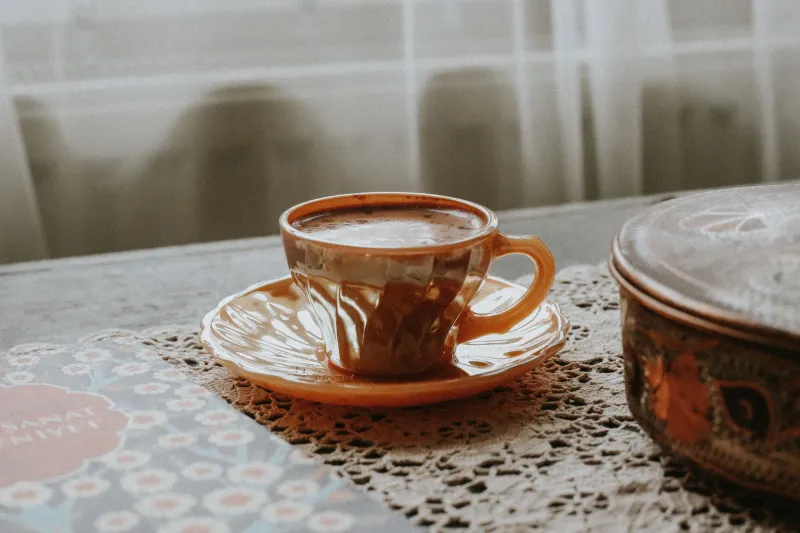
There's a small ceramic mug sitting on my kitchen windowsill. It's hand-painted, slightly lopsided, and glazed in a shade of blue that doesn't quite match anything else I own. I bought it at a Saturday market in Taos, New Mexico, because my sister collects mugs. She has a whole cabinet of them — the kind of person who actually uses her collection, which I always found charming.
That mug has been on my windowsill for two years. My sister has never seen it.
I'm not proud of this. But I'm also not as ashamed as maybe I should be.
The Moment It Stops Being a Gift
There's a very specific moment — and if you've been there, you know exactly what I'm talking about — when something you picked up for someone else quietly becomes yours. It's not dramatic. Nobody announces it. You just catch yourself wrapping it a little too carefully in your shirt before you tuck it into your bag, or you find yourself thinking about where you'd put it when you get home. Not where they'd put it. Where you'd put it.
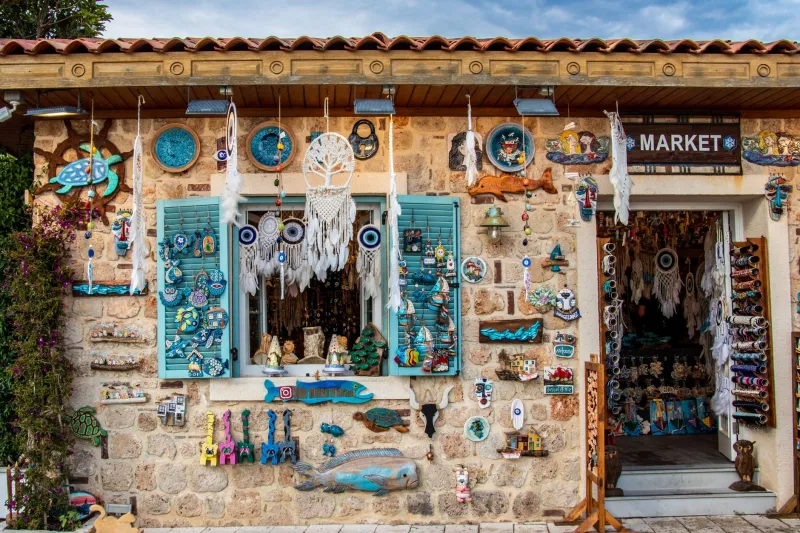
Sometimes it happens at the point of purchase. You're standing at a booth or a shop, and you pick something up thinking of your mom, your college roommate, your coworker who has an inexplicable thing for vintage tin signs. And then you hold it for a beat too long. You feel something — not quite possessiveness, but something adjacent to it. A reluctance.
Other times, it happens somewhere in transit. Somewhere between the market stall and the airport, or between the airport and your front door, the object quietly changes ownership in your mind. You tell yourself you'll still give it away. You probably even believe it.
Why We Keep Them
Here's the thing nobody really talks about: the gifts we buy for others while traveling are almost always projections. We're not just shopping — we're narrating. We're telling ourselves a story about the people back home, about what they'd love, about how well we know them. And sometimes that story is actually about us — about who we are on this trip, what moved us, what we wanted to hold onto.
When you spot something and think this is so Sarah, you're really doing two things at once. You're thinking about Sarah, yes. But you're also registering that this object resonated with you enough to make you think of her. It caught your eye. It snagged something.
So when the object ends up staying with you instead of making it to Sarah, maybe that's not entirely a betrayal. Maybe it's a more honest version of the same story.
The deliberately chosen souvenir — the one you bought for yourself, full stop — is curated. Intentional. It says: I saw this, I wanted it, I claimed it. But the accidental keepsake? The one that was supposed to be a gift? That one arrived sideways. It snuck past your filters. It tells a truer story about what actually got to you on that trip.
The Guilt Is Real (And Also Kind of Beside the Point)
Let's not pretend there's no guilt here. There is. Especially when the person you bought it for was someone you genuinely wanted to give something to — not just a vague obligation, but someone you love and thought of specifically. That guilt has some weight.
But guilt and meaning aren't the same thing. You can feel bad about not giving something away while also recognizing that the reason you kept it is worth paying attention to.
I've talked to enough travelers to know I'm not alone in this. A friend of mine has a small brass compass she bought in a shop in Charleston, South Carolina, because it reminded her of her dad, who used to take her sailing as a kid. She fully intended to give it to him. That was four years ago. It lives on her desk. Her dad has never asked about it, and she's never brought it up. But she thinks about him every time she picks it up.
Is that a failed gift? Or is it something else — a private object of memory that functions better as a keepsake than it ever would have as a present?
What These Objects Actually Hold
Deliberately curated souvenirs are a little like highlight reels. They represent the version of your trip you want to remember — or the version you want other people to know you had.
Accidental keepsakes are messier than that. They're connected to moments you didn't plan for: a conversation that went somewhere unexpected, a place you stumbled into on a wrong turn, a mood that surprised you. The Taos mug, for me, is tangled up with a whole afternoon I spent wandering the market alone after a difficult phone call. It has nothing to do with my sister's mug collection and everything to do with that particular Saturday and the way the light looked and the fact that I was, briefly, completely on my own in a way that felt good.
Giving it to her would have been generous. Keeping it is honest.
The Version of You That Bought It
There's one more layer to this, and it might be the most interesting one: the person who picked up that object was a version of you that existed only in that moment, in that place. Travelers are always slightly different from their everyday selves — more open, maybe, or more nostalgic, or more attuned to certain things. That version of you reached for something and felt something.
Keeping the object is, in a way, keeping a record of that version of yourself. The you who wandered a flea market in Nashville or a boardwalk shop in Cape May and got briefly, quietly moved by something small.
You can't give that away.
No Judgment Here
If you've got a drawer somewhere with a gift that never got gifted, or a shelf with something that was technically purchased for someone else — you're in good company. Most of us have at least one.
Maybe you'll give it away eventually. Maybe you'll keep it until you forget why you kept it. Maybe you'll look at it one day and finally understand what it was actually about.
Or maybe you'll just keep drinking your morning coffee out of a slightly lopsided blue mug and call it a day. There are worse ways to remember a trip.