Three Laps Around the Block Before You Let Yourself Buy the Thing
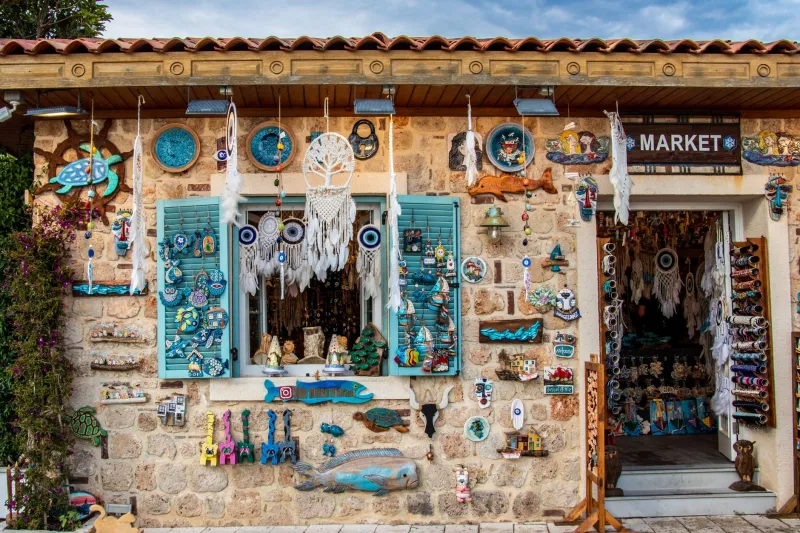
You spotted it on the first pass. A hand-painted ceramic bowl, or a small woodcut print, or some wildly specific piece of local kitsch that made you stop mid-stride. You looked. You maybe even touched it. Then you put it down, said something vague to yourself like I'll come back, and kept walking.
You came back. Twice. And you still didn't buy it.
If this sounds familiar, you're not alone — and you're not being especially rational either. There's a whole invisible architecture of hesitation that goes up the moment we find something we genuinely want while traveling. And most of the time, we don't even realize it's happening.
The "Real Traveler" Problem
Let's start with the most quietly embarrassing reason we don't buy things: we don't want to look like tourists.
Never mind that we are tourists. There's a certain self-image many of us carry into a trip — especially to places that feel culturally significant, or to destinations we've romanticized for years. We want to experience things authentically. We want to eat where the locals eat, walk where the locals walk, and absolutely not be caught dead buying a fridge magnet shaped like the Alamo.
So we walk past the souvenir shops with practiced nonchalance. We tell ourselves we're above the tchotchke economy. We take photos instead of purchasing things, as if documentation is somehow more sophisticated than ownership.
But here's the thing: the locals are often the ones running those shops. The artisan who made that ceramic bowl didn't make it for other locals — they made it for people passing through, people who wanted a piece of something they couldn't find at home. Buying it isn't a failure of authenticity. In a lot of cases, it's actually the point.
The Price Guilt Spiral
Even when we get past the identity stuff, there's another obstacle waiting: the price. Not necessarily because the item is actually expensive, but because of how our brains recalibrate value the moment we're traveling.
At home, you'd spend $40 on a nice dinner without blinking. But $40 for a handmade piece of pottery in a coastal New England town? Suddenly you're doing math in your head, converting it into some abstract unit of is this worth it, and talking yourself out of something you clearly wanted two minutes ago.
Part of this is the context shift. Travel already involves a lot of spending — flights, hotels, meals, activities — and after a while, the brain starts protesting. Every purchase starts to feel like one more thing on a tab that's already too long. The object itself stops being evaluated on its own merits and starts getting lumped into a vague anxiety about money that has almost nothing to do with the actual cost of the thing in your hand.
There's also a specific guilt that comes with buying something for yourself. We're often more comfortable spending on experiences, or on gifts for other people, than on something that's just... for us. A little indulgence. A small act of wanting something and getting it. That can feel surprisingly hard to justify.
The Practicality Trap
Close behind price guilt is the practicality concern, which is maybe the most seductive form of self-sabotage there is.
Where would I put it? It'll never fit in my carry-on. I don't have a place for something like that in my apartment.
These are not unreasonable questions. But notice how rarely we ask them about things we're not already a little afraid to want. Nobody interrogates the practicality of a restaurant meal or a concert ticket. We reserve that scrutiny almost exclusively for the things that feel like pure desire — objects that exist just because they're beautiful, or funny, or weirdly specific to a place and moment in time.
The practicality trap also has a sneaky second act: we tell ourselves we'll find something better later. Something more practical, more tasteful, more affordable. We put the object down and walk away convinced that a superior version of it is waiting just around the corner. It usually isn't. And by the time you're back at the airport, what you're left with is the memory of something you chose not to have.
What the Hesitation Is Actually Telling You
Here's a reframe worth sitting with: the things we circle back to — the items we pick up and put down, the shops we pass three times before going in — are often the most honest signals of what actually moved us on a trip.
Not the things we bought quickly and impulsively, and not the things we felt obligated to bring home for people. The things we debated. The ones that made us stop.
There's a reason you went back. Something about that object connected to something in you — a mood, a memory, a version of yourself you felt like while traveling that you don't always get to be at home. The hesitation isn't evidence that you shouldn't buy it. It's often evidence that you should.
Months after a trip, the things people tend to regret aren't the purchases. They're the ones they talked themselves out of. The print that would've looked perfect in the hallway. The locally made jam they put back because it seemed fussy to travel with food. The weird little figurine that made them laugh out loud in the middle of a market and that they never found again.
A Few Things Worth Remembering the Next Time You're Circling
You don't have to buy everything that catches your eye. But if you've walked past something twice and you're still thinking about it, that's data.
The "I'll find something better" instinct is almost always wrong. What you're holding is usually the thing.
Spending money on something that genuinely delights you is not a character flaw. It's actually a pretty good use of a travel day.
And maybe most importantly: the shops you almost went into, the objects you almost bought — those don't make great stories. The thing sitting on your bookshelf that you got in a tiny store in a town you almost didn't stop in? That one does.
Go in the shop. Pick up the thing. Let yourself want it.
You've already walked past it twice.