The Hidden Gem That Was Always Right There on Your Way to Work
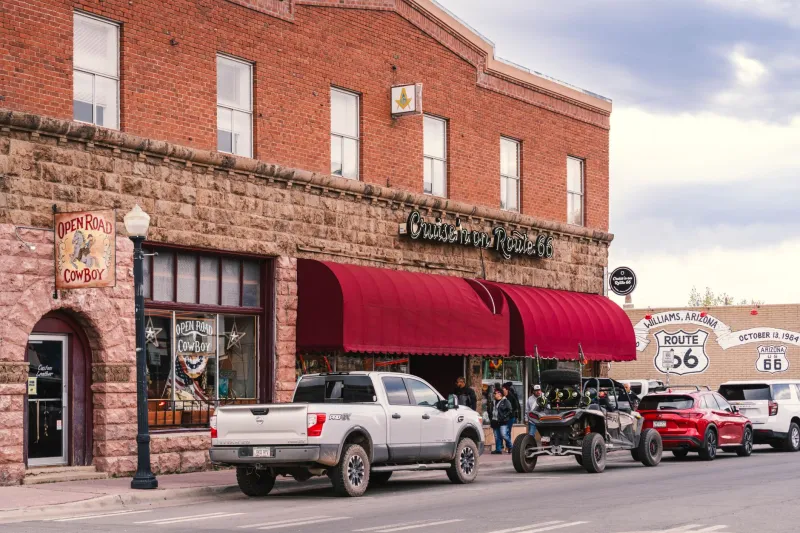
For eleven years, I drove past the same hand-painted sign on Route 9. It advertised something called the "World's Smallest Covered Bridge Museum" — though I use the word "museum" loosely, because from the road it looked like a guy's backyard with a laminated sign out front. I drove past it twice a day, five days a week, for over a decade. I always thought: someday.
I stopped on a random Wednesday last October. Spent forty-five minutes talking to a retired carpenter named Dale who knew more about 19th-century bridge joinery than anyone I'd ever met. He had photographs, diagrams, a whole binder of local history. He'd been waiting for someone to care.
I'd been twenty minutes away for eleven years.
The Great American Blind Spot
There's a particular kind of travel blindness that hits hardest at home. We are remarkably good at not seeing the places we pass every day. Familiarity breeds not contempt, exactly, but a kind of visual static — the brain stops registering what it's already categorized as "known territory."
This is especially true in America, where the cultural narrative around travel tends to be directional: outward, upward, away. The good stuff is somewhere else. Adventure is a flight away. The interesting things are in other countries, other states, other towns. Your town is just your town — the backdrop of ordinary life, not the setting of a story worth telling.
But that's almost never actually true. It's a trick of proximity.
What You Miss When You're Always Looking Ahead
Every town in America has at least one thing that would genuinely stop a visitor in their tracks — something a tourist from another country would photograph and talk about for weeks. It might be a roadside attraction that locals have stopped noticing. A diner that's been run by the same family since 1958. A mural on the side of a building that has a whole history behind it nobody bothered to explain.
In small-town America especially, these pockets of strangeness and depth are everywhere. The Midwest is full of them. The rural South. The forgotten stretches of the Northeast between the cities. These are places with real characters, real histories, real weirdness — the kind of texture that travel writers fly to other continents to find.
The problem isn't that the stories aren't there. It's that we've decided in advance they aren't.
The Psychology of the Familiar
Psychologists who study attention and perception have a term for this: "inattentional blindness." When we expect an environment to be ordinary, we literally see less of it. Our brains are efficiency machines — they filter out what they've already processed and focus cognitive resources on novelty. So the more familiar a route becomes, the more invisible it gets.
Travel hacks this system by forcing novelty. Everything is new, so everything gets processed. That's why a week in a foreign city can feel more vivid and memorable than a year of ordinary Tuesday mornings. It's not that more is happening — it's that you're actually seeing it.
The trick, then, is to bring that tourist brain home. To look at your own surroundings like you just landed there and have forty-eight hours to figure the place out.
What Happens When You Actually Stop
I've been running a loose personal experiment for the past year or so — just stopping at things I've always driven past. A state historical marker I'd ignored for years (turned out to mark the site of a genuinely wild piece of local labor history). A plant nursery that doubles as an unofficial neighborhood gathering spot on Saturday mornings. A used bookstore tucked behind a dry cleaner that I'd somehow never registered as existing.
Every single stop has been worth it. Not in a dramatic, life-changing way — more in the quiet way of realizing that the world is denser than you thought. That there are more layers to the places you think you know than you've bothered to peel back.
And the people you meet when you stop? They're often the ones who've been there all along, tending the thing, waiting for someone to notice. Dale and his bridge museum. The woman at the historical marker who turned out to be the great-granddaughter of one of the workers mentioned on the plaque. The guy at the bookstore who knew every previous owner of every book in the place.
Start Somewhere Small
You don't need a passport or a long weekend to experience this. You need a slightly different route home and the willingness to pull over.
Pick one thing you've been ignoring. The weird little shop. The trail you always mean to try. The diner with the handwritten specials board that you've passed a hundred times. Give it forty-five minutes. Talk to whoever's there.
The journey doesn't always start at the airport. Sometimes it starts at the end of your own driveway — you've just been driving past it on the way somewhere else.