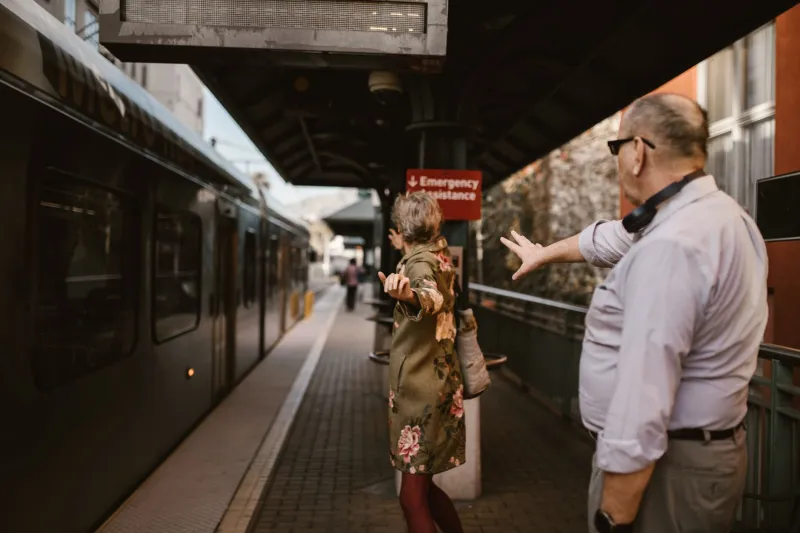
The Stranger Who Knew Exactly What You Needed to Hear
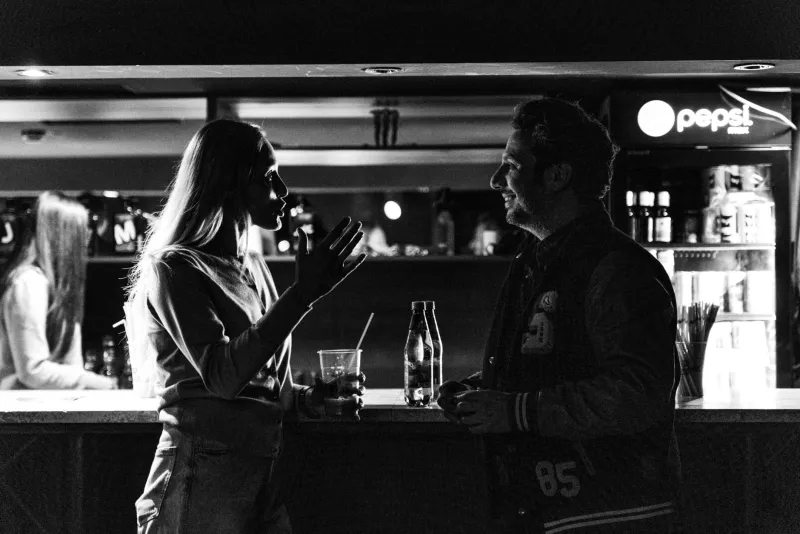
You've probably had at least one. A conversation so unexpected, so weirdly timed, that it felt less like small talk and more like something the universe arranged on purpose. Maybe it happened in a dive bar in Memphis. Maybe it was a rest stop somewhere in Wyoming, or a ferry crossing in the Pacific Northwest. You were passing through, they were just doing their thing, and somehow the two of you ended up saying something real.
Those moments don't show up in any trip recap. They're hard to explain to people who weren't there. But they stick — sometimes longer than the whole trip itself.
The Ones You Didn't Plan For
Travel has a funny way of loosening people up. You're out of your routine, away from the people who already know your whole story, and something about that creates space. Space to listen differently. Space to talk to someone you'd never approach back home.
Think about the last time you had a genuinely surprising conversation with a stranger. Chances are, it happened somewhere you were temporarily untethered — an airport gate, a hostel common room, a barstool in a city you'd never been to before. That's not a coincidence. Familiarity keeps us guarded. Novelty cracks things open a little.
A solo traveler passing through New Orleans once described sitting at the bar of a tiny spot on Frenchmen Street, just killing time before a flight. The bartender — who'd grown up in the Ninth Ward, who'd stayed through Katrina and everything after — started talking about what the city meant to the people who actually lived there versus what tourists tended to see. It wasn't a lecture. It wasn't even particularly dramatic. But she said something about resilience that reframed the entire trip in retrospect. The jazz clubs, the food, the way strangers made eye contact on the street — suddenly it all read differently.
That's the thing about these conversations. They work retroactively. They change what you already saw.
Why Fleeting Connections Hit Differently
There's actually something to this beyond just good luck. Psychologists who study social connection have long noted that interactions with strangers — what some researchers call "weak ties" — can carry surprising emotional weight precisely because there's no history and no future. You're not managing a relationship. You're just... present.
With friends or family, conversation comes pre-loaded with context. With a stranger on a trail in Colorado or a fellow passenger on a red-eye, none of that baggage exists. They don't know your job, your relationship status, your complicated family stuff. And you don't know theirs. So what gets said tends to be more honest, more direct, sometimes more generous.
People tell strangers things they wouldn't tell their closest friends. And strangers, weirdly, often say exactly the right thing — not because they're wise, but because they're not trying to manage your feelings. They're just responding to what's in front of them.
The Art of Actually Letting It Happen
Here's the uncomfortable part: most of us are terrible at this. We've gotten so good at filling silence with our phones that we've stopped noticing the person three feet away who might be about to say something that shifts our whole perspective.
Being the kind of traveler who has these conversations isn't about being extroverted or performing some kind of friendly-American routine. It's mostly about subtraction. Put the phone away. Sit at the bar instead of a table. Take the local bus instead of the rideshare. Eat at the counter. Ask one genuine question and then — this is the part people skip — actually wait for the answer.
The question doesn't have to be deep. "How long have you lived here?" "What do you think about what's happening with this place?" "Is it always this busy?" Ordinary openers can go anywhere if you're willing to follow. The trick is resisting the urge to redirect the conversation back to yourself every thirty seconds.
Listen like you're going to have to describe this person to someone later. Not their appearance — their way. How they talk about the thing they care about. What they light up over. That kind of attention is rare enough that people feel it, and they tend to respond by going a little deeper.
The Stories That Become Part of Your Story
Sometimes these conversations are funny. A cab driver in Chicago who spent twenty minutes explaining, with complete sincerity, why deep-dish pizza is actually a casserole and Chicago should stop defending it. A retired schoolteacher at a campground in the Smokies who had opinions about every national park in the country, ranked and filed, ready to deploy.
But sometimes they're heavier. A veteran at a diner in a small Ohio town who said something about coming home that you couldn't have read in any book. A young woman at a bus station in Albuquerque who was mid-journey through something hard and talked about it with a clarity that felt almost impossible given the circumstances.
Those are the ones that travel with you. Not because they were dramatic, but because they were true. Someone handed you a piece of their actual life, and for whatever reason, you were in the right headspace to receive it.
And it becomes part of your story — not in a stealing-someone-else's-experience way, but in the way that all good stories work. Someone else's truth illuminates something in your own. You carry it forward. You think about it on the drive home, or six months later when something in your regular life rhymes with what they said.
The Conversation You Almost Didn't Have
The wild thing is how close most of these moments come to not happening. You almost stayed in the hotel. You almost ate at the tourist spot instead of the place with the hand-painted sign. You almost kept your headphones in.
Travel rewards the small bets. The detour down the street that looked interesting. The decision to linger a little longer. The moment you close the app and just look around.
Some of the best conversations I've ever heard about — and some of the best I've stumbled into myself — happened because someone was willing to be slightly inefficient. To not optimize the experience. To waste a little time in a way that turned out not to be wasted at all.
The itinerary will get you to the places. But the stranger at the end of the bar, the hiker coming down from the summit, the woman waiting for the same delayed flight — they might be the reason you remember the trip at all.