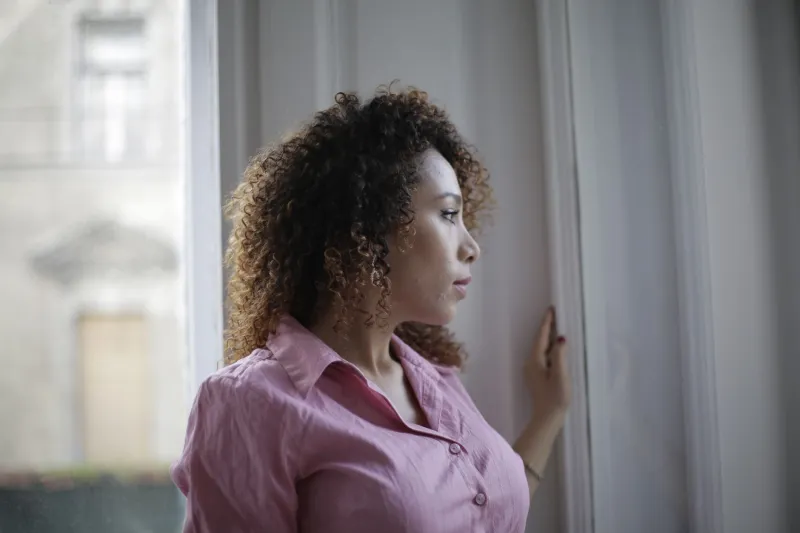
The Night You Cooked Her Recipe and Realized You'd Turned Into Your Mother
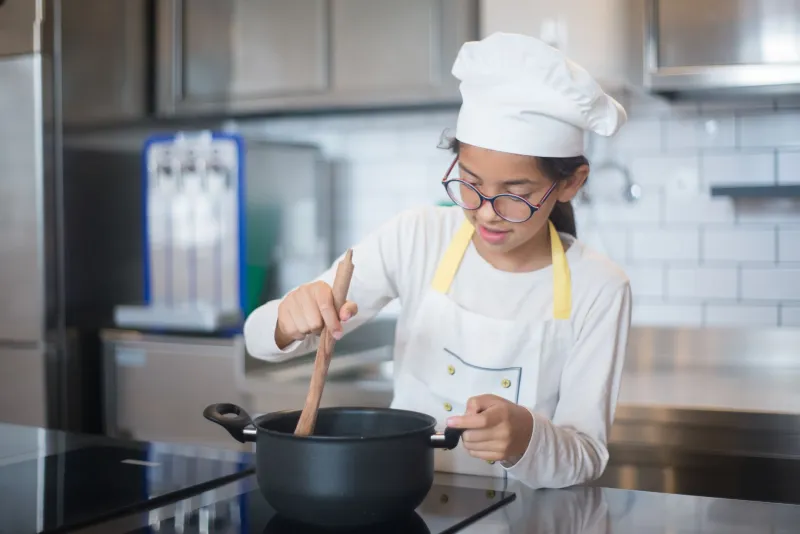
It happened on a Wednesday. Nothing special about it—just a regular weeknight, you standing in your own kitchen, making a pot of something you'd eaten a hundred times as a kid. And then your hand moved in a way that wasn't yours. The way you tasted from the spoon, then tapped it twice on the edge of the pot before setting it down. The way you turned the burner down without looking, like your body already knew the right temperature.
You stopped. Because that wasn't you. That was her.
The Inheritance You Didn't Know You Were Carrying
There's a whole category of things we inherit from our parents that never gets listed in any will. Not the furniture, not the jewelry, not the bank account. The other stuff. The way you hold a knife. The particular phrase you use when you're frustrated. The habit of checking the locks twice before bed, or saving plastic bags under the sink even though you tell yourself you'll stop.
These things don't arrive with fanfare. They seep in slowly, over years of watching and absorbing, until one day they just are you. And usually you don't notice until you're standing in your kitchen on a Wednesday, alone, and suddenly you're watching yourself from the outside.
For a lot of us, the first response is something between amusement and mild horror. I swore I'd never do that. Followed, if you sit with it long enough, by something a lot more complicated.
Distance Has a Way of Clarifying Things
If you've ever lived far from home—whether that's across the country, across an ocean, or just far enough that you don't make it back for every holiday—you know that distance has a strange clarifying effect. When you're not around your family all the time, you stop taking their habits for granted. You stop seeing them as background noise and start seeing them as choices. Patterns. Traditions that someone, somewhere, decided to keep.
And then you move into your own place, set up your own kitchen, start cooking your own meals—and you realize you brought all of it with you anyway.
Maybe it's the way she always added a bay leaf even when the recipe didn't call for it. Maybe it's the Sunday morning ritual of coffee before anything else, non-negotiable, almost sacred. Maybe it's something you can't even name, just a way of moving through a kitchen that feels like home even when you're a thousand miles away from the house you grew up in.
The Complicated Feelings That Come With It
This moment—the catching-yourself moment—doesn't always feel warm and nostalgic. Sometimes it's genuinely unsettling. Especially if your relationship with a parent is complicated, or was, or is still being figured out.
Because what does it mean to carry someone's habits inside your body when you're still working out how you feel about them? What does it mean to do the thing they always did, automatically, without choosing to? Is that love? Is that just biology? Is it something you're allowed to be annoyed about?
The answer, probably, is yes to all of it at once. Humans contain multitudes, and so do the people who raised us.
Cooking as Inheritance
Food is one of the most direct channels we have to the people who came before us. There's actual research on this—the way smell and taste connect more directly to memory than almost any other sense. A certain dish doesn't just remind you of your childhood; it takes you there. Physically, almost. For a second, you're back at that table, in that kitchen, with those people.
When you cook your mother's recipe—or your grandmother's, or your dad's—you're not just making dinner. You're participating in a chain of transmission that goes back further than you can trace. Someone taught them. Someone taught that person. And now here you are, carrying it forward, whether you meant to or not.
There's something quietly profound about that, even on an ordinary Wednesday.
The Reconciliation That Happens in the Kitchen
A lot of people find that adulthood—real adulthood, the kind that involves your own bills and your own decisions and your own occasional crises—softens the way they see their parents. Not because the complicated stuff disappears, but because you start to understand, from the inside, how hard it is to just be a person. To keep a household running. To show up every day and cook dinner and hold it together.
And sometimes that understanding arrives not through a conversation or a therapy session or a meaningful phone call, but through a pot of soup. Through the realization that you are, in some small and specific way, her. And that maybe that's not the worst thing.
Maybe that's actually the closest thing to peace you've found all year.
You Don't Have to Resolve It
You don't need a tidy conclusion here. You don't have to decide whether you're grateful or ambivalent or some complicated mixture of both. You don't have to call her and tell her what happened, or make it into a moment.
You can just finish cooking the dinner. Taste it once, tap the spoon on the edge of the pot, set it down.
And let that be enough.