The Life You Almost Lived: Why That Other City Still Feels Like It's Waiting for You
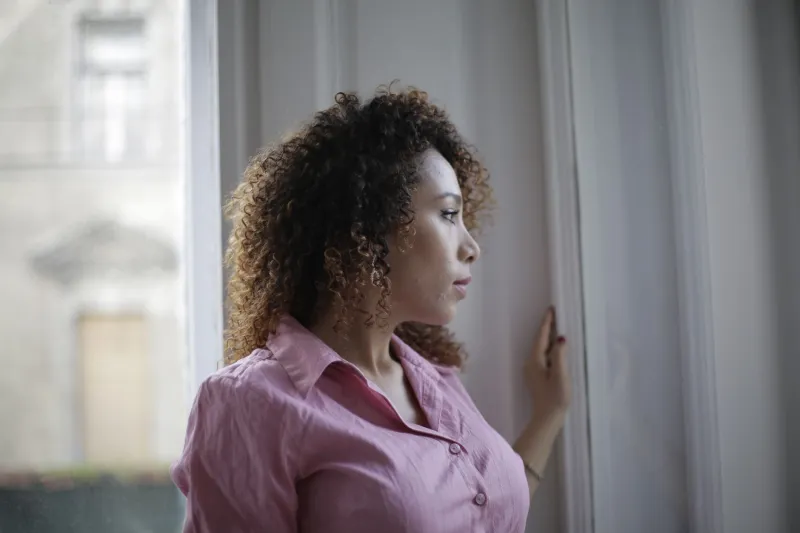
There's a specific kind of daydream that hits you at the strangest moments. You're sitting in traffic, or rinsing a coffee mug, or scrolling through someone else's Instagram story — and suddenly you're back in that apartment you toured in Denver, the one with the exposed brick and the kitchen window that looked out over a street full of coffee shops you never got to become a regular at. You remember the landlord's name. You remember how the afternoon light came through at a certain angle. You remember thinking, this could be my life.
It wasn't. You signed somewhere else, or moved back home, or just kept driving. But that apartment — and more accurately, the whole parallel existence it represented — has never quite let you go.
You're not alone in this. Not even close.
The Near-Miss Is a Different Kind of Loss
Psychologists have spent a fair amount of time studying regret, and one of the more counterintuitive findings is that near-misses tend to sting worse than outright failures. When something is just barely out of reach — when you almost got the job, almost took the leap, almost stayed — your brain has enough material to build a convincing alternate reality. And convincing alternate realities are dangerous things.
Actual rejection tends to close a door pretty firmly. You didn't get the role; you move on. But the life you almost chose stays cracked open. There's no definitive ending, no hard proof that it would have gone sideways. The fantasy stays intact because it was never tested.
That Denver apartment? In your head, it still has good light. The neighborhood still feels walkable and alive. The version of you who lives there is, somehow, more settled. More interesting. Maybe even happier — though you'd never say that out loud.
Why Cities Carry So Much of This Weight
Travel makes this worse, in the best and most complicated way. When you move through a place as a visitor, you're seeing it at its most romantic — you're free from the commute, the grocery run, the bad week at work. Cities reveal themselves slowly to the people who actually live in them, but to someone passing through, they offer only the highlight reel.
So when you spent that long weekend in New Orleans and found yourself thinking I could actually live here, you weren't imagining the August humidity or the flooding season or the very real cost of building a life from scratch somewhere new. You were imagining the late dinners, the music bleeding out of open doorways, the particular way the city felt like it had room for whoever you wanted to be.
This is why so many Americans come back from trips with a low-grade ache that has nothing to do with missing the place itself. It's about missing the self they briefly imagined becoming there.
Chicago does this to people. So does Savannah. So does that small mountain town in Colorado you passed through once and still think about every time the seasons change.
The Stories We Tell About Who We Could Have Been
There's something deeper going on here than simple nostalgia. The lives we didn't choose function almost like personal mythology — they become the stories we reach for when we need to explain ourselves, even just to ourselves.
I almost moved to Seattle. That sentence carries weight. It implies a version of you that was bold enough to consider it, open enough to want something different, self-aware enough to recognize a turning point. The almost-life flatters you in ways the actual life sometimes doesn't.
This isn't delusion, exactly. It's a very human way of maintaining a sense of possibility. As long as the other path exists — even just in memory — you're not fully defined by the choices you actually made. You still contain multitudes. You're still someone who could have gone a different way.
The trouble is that this kind of thinking can quietly undermine the life you're actually standing in. When the city you didn't move to becomes shorthand for everything you could have been, the city you did choose starts to feel like a consolation prize — even when it isn't.
What We're Really Mourning
Here's the thing nobody really says out loud: it's rarely about the apartment, or the city, or even the job. It's about the version of yourself that would have existed inside that choice. You're not grieving a floor plan. You're grieving a self.
And that self was, by definition, unfinished. It never had to deal with a difficult neighbor, or a disappointing year, or the slow realization that wherever you go, you bring the same complicated interior life with you. The unlived version is immune to all of that. It gets to stay perfect.
This is worth sitting with, especially for people who move through the world a lot — the frequent travelers, the ones who've lived in multiple cities, the people who've built and rebuilt their lives more than once. The more you move, the more alternate selves you accumulate. And the more alternate selves you carry, the heavier the question becomes: is this the right life, or just the one I happened to end up with?
Making Peace With the Door You Walked Through
There's no clean resolution here, and honestly, anyone offering you one is probably selling something. The romanticization of unlived lives is part of being a conscious, curious person who understands that choices have weight.
But there's a difference between holding onto the other path as a source of wonder — a reminder that you're someone who could have gone many ways — and using it as a quiet indictment of the life you're actually living.
The apartment with the exposed brick and the good kitchen light might have been everything you imagined. It also might have had terrible insulation and a landlord who never fixed anything. You'll never know, and that's not a tragedy. That's just the deal.
What you do know is the life in front of you — the one that's messy and specific and fully real in all the ways fantasies never are. That life has its own good light, if you bother to look for it.
The other city will keep waiting. It's fine to let it. Just don't let it convince you that you ended up in the wrong story.