Someone Left Their Whole Life in a Shoebox at Your Place
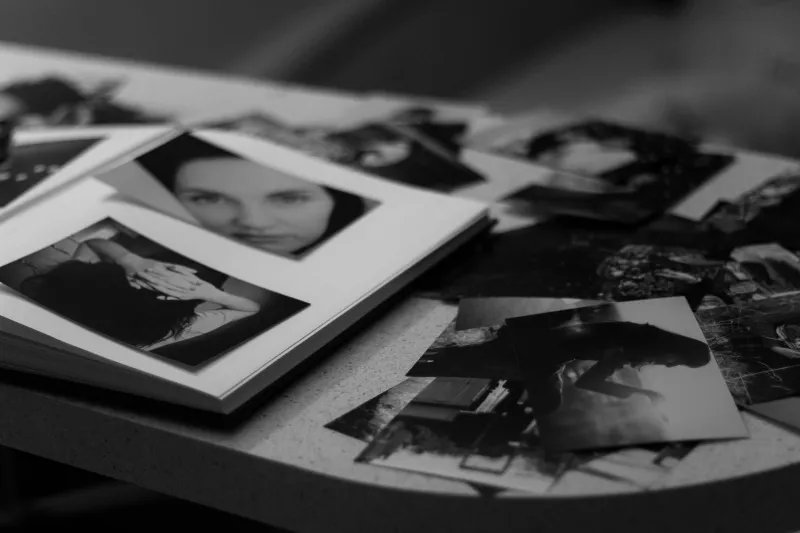
It was probably a Tuesday. Ordinary light, ordinary morning. You were cleaning out the hall closet, or pulling stuff from under the bed, or doing that thing where you finally commit to reorganizing a shelf you've been ignoring for eight months. And then — there it is. A photo album. A manila envelope stuffed with prints. A shoebox of Polaroids with names written on the back in someone else's handwriting.
None of it is yours.
Maybe it belonged to the previous tenant. Maybe a houseguest left it accidentally, someone who passed through your life briefly and never came back for their things. Maybe you moved into a furnished place and discovered it wedged behind a drawer. However it got there, you're holding it now — and you're suddenly responsible for a story you have no part in.
That's a stranger feeling than it might seem.
The Weight of an Accidental Inheritance
Photographs are loaded objects. They're not just images — they're proof that someone existed in a moment, that they were standing somewhere, laughing at something, next to someone who mattered to them. When you look at someone else's photos, you're an uninvited witness to moments that were never meant for your eyes.
And yet, once you've seen them, you can't unsee them. You start filling in narratives. The woman in the floral dress at what looks like a Fourth of July cookout — who is she? The kid blowing out birthday candles in a kitchen that looks like it's from the early '90s — how old would they be now? You find yourself caring, in a low-key, almost involuntary way, about people you will almost certainly never meet.
This is what photographs do. They create intimacy across distance. They were designed to.
The Impulse to Search
For a lot of people, finding a stranger's photos triggers an immediate instinct: find the owner. Return them. These things matter to someone.
And it's true — they probably do. Family photos, in particular, are the kind of thing people mourn when they lose them. There's a whole quiet corner of the internet dedicated to people trying to reunite found photographs with their original owners. Facebook groups, Reddit threads, Etsy sellers who specialize in vintage found photos (which is its own complicated rabbit hole). The impulse to return something personal to its source is a decent one.
But the search isn't always possible. Sometimes there's no name, no address, no identifying information beyond a face and a decade. The previous tenant moved across the country. The houseguest's number is disconnected. The trail goes cold fast, and you're left holding something you can't give back.
The Ethical Weight of Keeping
So what do you do with it?
This is where it gets genuinely complicated. Throwing away someone's photographs feels wrong in a way that's hard to articulate but impossible to ignore. It feels like erasure — like you're making a decision about someone else's memories that you have no right to make. Even if they left them behind, even if they may not remember they exist, the act of putting them in a trash bag feels like a small act of violence against someone's history.
But keeping them has its own uncomfortable edge. You become the custodian of a story you don't understand, the archivist of a life you can't fully interpret. There's something voyeuristic about it, even if the looking is entirely innocent.
Some people split the difference — they keep the photos indefinitely, telling themselves they'll figure out what to do eventually, until eventually becomes years and the shoebox just becomes part of the furniture of their life.
Which, honestly? Is probably the most human response.
What Other People's Memories Teach You About Your Own
Here's what's interesting about sitting with someone else's photographs for any length of time: it changes how you think about your own.
You start wondering who might someday hold your photos with the same confused tenderness. Whether the images you've taken — the ones on your phone, the prints in that drawer you haven't opened in three years — would tell a coherent story to a stranger. Whether the people you love would be recognizable in them, or whether they'd just be faces.
There's something clarifying about holding evidence of a life that isn't yours. It reminds you that every photograph is an act of hope — a bet that someone, someday, will care enough to look. And that the looking matters, even when the context is gone.
The Story Keeps Going Without You
The people in those photos lived their lives before you found the pictures, and they're living them still — or they lived them fully and are gone. Either way, you're not in the story. You're just a temporary guardian of a few frames of it.
Maybe that's enough. Maybe the most you can do is look at them with some respect, give them a safe place to exist for a while, and stay open to the possibility that the right moment to return them will eventually present itself.
Or maybe you'll end up keeping that shoebox in your closet for the next decade, pulling it out occasionally, looking at those faces, and feeling the quiet weight of knowing that somewhere out there, someone is probably missing exactly these photographs and has no idea where to look.
That's not a comfortable thought. But it's an honest one.
And sometimes, sitting with someone else's story for a while — even without understanding it — is its own kind of gift.